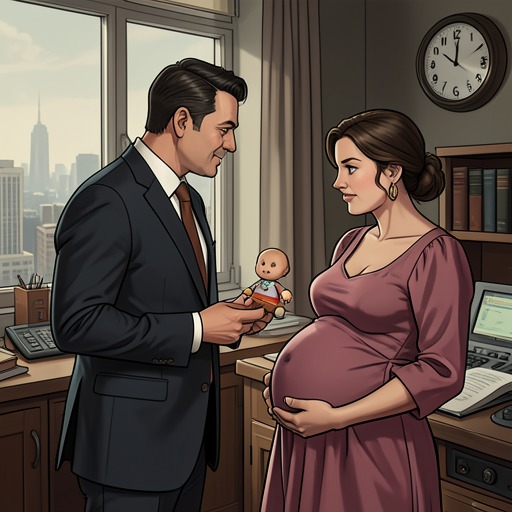
Event 1
Sunny Klein's Deathbed Revelation
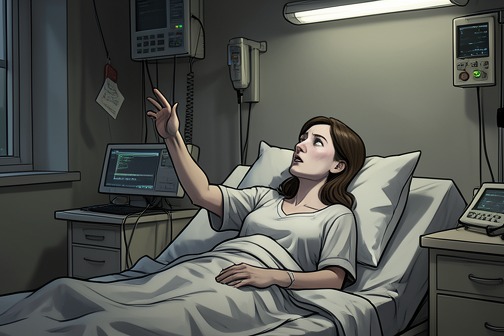
[Sunny Klein](entity:character-recall-character-sunny-klein-e79158578f89)’s deathbed revelation is a brief but consequential disclosure: three days before her death, she told [Will Klein](entity:character-recall-character-will-klein-eb8b6b999b8d) that his missing brother, Ken, was still alive. The statement opens a possibility [Will](entity:character-recall-character-will-17d4ceb7f768) cannot readily accept or reject. Its weight comes not from explanation or proof, but from the circumstances in which it is spoken, its stark brevity, and the uncertainty that follows it into the family’s mourning.
## The Deathbed Statement
Will recalls that [Sunny](entity:character-recall-character-sunny-8770992776bb) was gravely ill and spent most of her time asleep. In that condition, she said, “[He's alive](entity:expression-recall-expression-he-s-alive-fc941d0dde3f).” She had warned that these were not her last words, though they came close to being so. The statement was made only once, and she did not explain it. Will emphasizes both its exact wording and its isolation: there is no account of how she knew, what she believed Ken had done, or why he had not come home.
Sunny’s condition leaves Will unsure how much confidence to place in the disclosure. He doubts whether this moment was lucid, and the possibility of medication affecting her words remains central to the family’s later response. Yet uncertainty does not make the statement emotionally neutral. Will considers that Ken’s being alive might be either good or bad news; the revelation offers hope while also reopening the unresolved circumstances of his absence.
## What Was Left Unsaid
The disclosure does not become a conversation between mother and son. Will recalls that Sunny had one more possible lucid moment, when he told her she had been a wonderful mother, said that he loved her, and said goodbye. They did not speak about Ken then. Will notes that silence did not mean the family was not thinking of him, as though he were present at Sunny’s bedside. The contrast is defining: Ken is intensely present in their thoughts, yet absent from the final exchange between Will and his mother.
That separation also limits what the revelation can establish. Sunny’s assertion is a claim about Ken’s survival, not an explanation of his whereabouts or a confirmed account of his actions. Because she says nothing more, Will is left with a sentence whose personal importance exceeds its evidentiary detail. The episode’s force lies in that gap between what she states and what she can no longer clarify.
## The Revelation at the Shivah
Four days after Sunny’s death, the family returned home to sit shivah. Will then told their father that his mother had said Ken was still alive. Their father stiffened briefly before giving a sad smile and responding, “It was the drugs, Will.” His immediate dismissal makes the disagreement less a dispute settled by evidence than a difference in how each man handles Sunny’s words: Will brings the possibility forward, while his father explains it away.
When Will presses him, their father recalls more of what Sunny had said. According to him, she also claimed that Ken had not killed Julie Miller and would have returned by then except that he had to do something first. The account adds two important assertions, but does not resolve their source or reliability: Will learns them through his father’s recollection, and his father continues to insist that Sunny was not making sense. The disclosure therefore grows in scope while remaining uncertain.
## Narrative Significance
The revelation changes the meaning of Ken’s absence without immediately settling it. Before Sunny speaks, his survival is not offered as a possibility in this exchange; afterward, Will has a reason to question the family’s understanding of what happened. The further claims attributed to Sunny sharpen that uncertainty by linking Ken’s possible return to Julie Miller’s death and to an unfinished task, but provide no details that would explain either.
The event is framed through Will’s later recollection, so the reader encounters Sunny’s words alongside his doubt about her lucidity and his father’s refusal to credit them. Neither response conclusively verifies her account. That tension gives a very short utterance lasting force: “He's alive” can be heard as hope, as a drug-affected statement, or as an incomplete lead whose meaning remains open. At the family’s moment of mourning, the sentence makes Ken present again while leaving the central questions about him unresolved.
Event 2
Sheila Rogers Disappears and Is Linked to the Albuquerque Murders
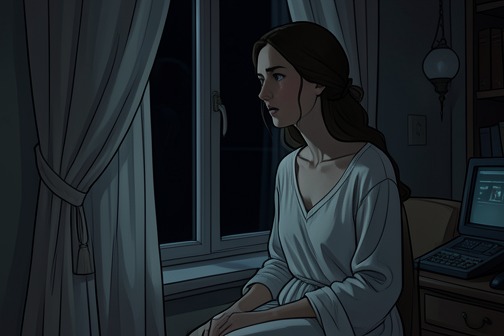
[Sheila Rogers](entity:character-recall-character-sheila-rogers-7a874ade9e9d)’s disappearance begins with a quiet departure from [Will](entity:character-recall-character-will-17d4ceb7f768)’s bedside and becomes the link between his private life and an investigation into murders in Albuquerque. Will’s decision to leave her alone, followed by the discovery of her fingerprints at a crime scene, gives the disappearance both an intimate source of regret and a growing criminal significance.
## The Night Sheila Leaves
On their second date, Sheila had entertained Will with a card trick, then revealed the more ordinary, playful side he associated with her: she liked cherry Kool-Aid and boy bands, sang opera, read voraciously, and loved to dance. That recollection makes her later withdrawal difficult to reconcile with the woman he thought he knew. When Will finds her awake and looking out at the view, she apologizes but offers no explanation, asking him to go back to bed and saying she will join him shortly.
Will considers staying with her or trying to comfort her, but concludes that she is unreachable and that any attempt to intervene might do harm. He returns to bed and waits. Sheila does not come back. In retrospect, Will calls leaving her alone a huge mistake: the decisive moment is not a confrontation but his acceptance of her request, followed by the silence of her absence.
## A Fingerprint Links Her to Albuquerque
The disappearance acquires a public and criminal dimension when agents come to Will’s office looking for Sheila. Their request surprises him; he had not expected her name to be the reason for their visit. They show him a photograph of a disordered room with a dead man at its center, turning what had been an unexplained absence from his bedside into part of a murder investigation.
The link is forensic. Although someone had thoroughly wiped the room, investigators recovered one clean set of fingerprints that belonged to neither victim. A computer search produced a match: the prints were Sheila’s. The agents stress both her criminal record and the difficulty they are having locating her. The evidence does not explain what she did at the scene, but it makes her disappearance newly consequential: she is no longer simply the woman who failed to return to bed, but a person sought in connection with the Albuquerque killings.
When Will hears the result, his mind returns to the earlier image of Sheila standing at the window. He recognizes her in the remembered scene, yet the memory gives him no reason for her departure and no answer to the investigators’ discovery. The contrast between the fingerprints, a concrete trace left at a crime scene, and her unaccounted-for whereabouts drives the mystery forward: the evidence connects her to the case while leaving her role unresolved.
## The Criminal Context Behind the Search
Later accounts place Sheila within a criminal world that helps explain why investigators treated her disappearance as more than a private mystery, without establishing what she did in Albuquerque. [Joseph Pistillo](entity:character-recall-character-joseph-pistillo-2805cc411582) described her earlier work on the streets, where she gained regular customers and eventually became connected to larger drug dealers. He said she began carrying and making deliveries, and was trying to get clean when those connections made it difficult for him to pressure her.
Pistillo identified Lenny Misler, a mob attorney, as one of those connections: after Sheila was arrested while carrying drugs, Misler represented her. This history gives the agents’ reference to her criminal record a wider context, but it does not determine her part in the Albuquerque crime scene. Her fingerprints put her there; her past made the investigators’ concern intelligible; her whereabouts and the meaning of her presence remained unanswered.
## What the Evidence Establishes—and Leaves Open
The investigation establishes a specific connection, not a complete account: Sheila’s fingerprints were recovered from a room where one of the Albuquerque victims had been found, and agents were unable to locate her. Those facts place her within the investigators’ inquiry, but they do not show what she was doing in the room, whether she harmed anyone, or why she left Will without explanation. The gap between a trace that can be matched and a person who cannot be found is the event’s defining tension. Will’s memory offers a last intimate image of Sheila at the window; the investigation offers a forensic link to a murder scene. Neither supplies the missing explanation, so her disappearance remains both a personal rupture and an unresolved criminal question.
Event 3
Will and Squares Begin Searching for Sheila
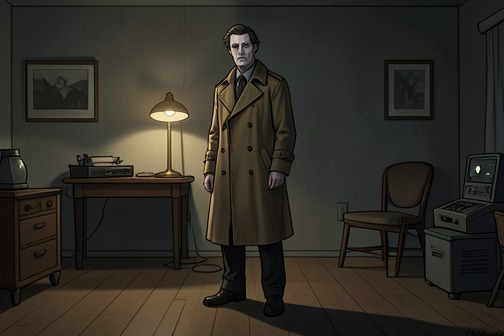
[Will Klein](entity:character-recall-character-will-klein-eb8b6b999b8d) and [Squares](entity:character-recall-character-squares-7005432f23aa) begin searching for [Sheila Rogers](entity:character-recall-character-sheila-rogers-7a874ade9e9d) by looking backward: their investigation follows the traces of her earlier life, from the streets where she first arrived as a runaway to [Louis Castman](entity:character-recall-character-louis-castman-91bf916bc0c1), the pimp who once controlled her. The search turns a private absence into a chain of testimony and leads, while revealing how vulnerable young people can disappear into a street life that [Covenant House](entity:location-recall-location-covenant-house-49396337a75e) tries to reach but cannot always undo.
## The Search Begins with the Past
When [Will](entity:character-recall-character-will-17d4ceb7f768) says he has to find Sheila, Squares agrees to help and points out that Will will not manage the search alone. Their first decision is to investigate her history rather than pursue an immediate destination. Squares frames that approach as looking back before moving forward, a method that becomes the search’s organizing principle: Sheila’s whereabouts are unknown, so the men begin with the people and circumstances that shaped her earlier life.
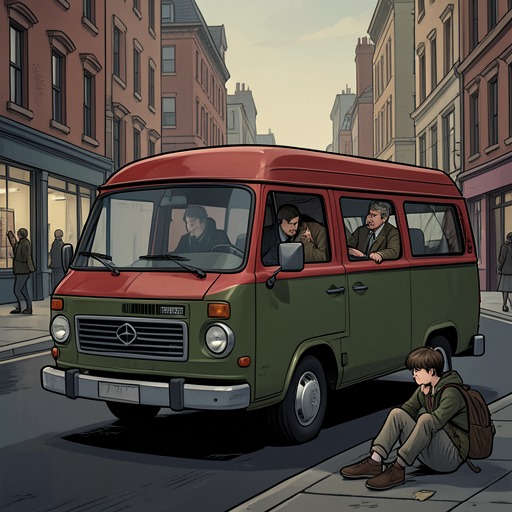
The investigation takes place against the work of Covenant House outreach. Its van moves into areas where runaway young people may be found, seeking out those who do not come to the shelter’s doors. The narrative describes street outreach as an effort to connect with the community’s most difficult corners and reach young people often dismissed as throwaways. It also stresses the limits of that work: more young people are lost than saved, and the longer a child remains on the street, the harder it is to help them leave. That institutional perspective gives the search a wider human context. Finding Sheila matters to Will personally, but her story belongs to a pattern of youth exposed to exploitation and difficult to retrieve once they have been drawn into it.
## Tracing Sheila’s Street History
Squares explains that Sheila could have been among the women working the streets. She had come from the Midwest as a runaway, arriving by bus and entering street life. Will finds the possibility painful because Sheila is not an unknown young person to him but someone he loves and remembers with profound tenderness. The contrast between that intimate memory and her documented history makes the search more than a procedural inquiry: each fact about her past revises what Will must confront about the person he thought he knew.
Squares has consulted Sheila’s file. It records her first arrest at sixteen, followed by three more arrests within eighteen months, for prostitution while she was working for Castman. A later arrest involved drugs and a knife, though the attempted charges were dismissed. These records establish that Sheila had been entangled with the criminal justice system while still a teenager; they do not explain her whole life, but they identify Castman as the first concrete lead the search can pursue.
The search also exposes the racial tension within Will and Sheila’s relationship. Will recognizes that Squares’s reference to Sheila being Black is not a racist dismissal, but an acknowledgment of strain that Will had observed between them. He understands that the tension existed alongside, and was less powerful than, their love. The detail complicates the account of their closeness without reducing it: the search is driven by Will’s attachment, but the story does not present love as a force that makes every difference disappear.
## From a Rumor to Castman
At a later stop, Squares asks [Raquel](entity:character-recall-character-raquel-7e2d9af765c3) whether she remembers Castman. Her immediate reaction is alarm: her expression goes slack, and she looks around. When Will asks where they might find him, Raquel offers only a rumor, directing them to a place near Wright Street and Avenue D. She then walks away, and Will watches her disappear into the night. The lead is uncertain, but it advances the inquiry from Sheila’s records to the network of people who may know Castman.
When Will and Squares locate him, they first hear from Tanya, who describes Castman’s past violence toward her and leaves the room. Her account gives the men reason to confront him, and Squares asks whether he is Castman. The encounter makes clear that their questioning concerns an alleged abuser, not merely a name in an old file. Later, when Will asks about Sheila directly, Castman recognizes her name and agrees to speak. His recollections become a central, though self-interested, source of information about her early years.
## What Castman’s Account Reveals
Castman says he met Sheila roughly ten or fifteen years earlier, when she arrived by bus from Iowa or Idaho. He describes waiting at a terminal for new arrivals and presenting himself as a respectable, patient businessman. His account reveals the calculated way he sought out young runaways and drew them into his control. He also recounts subjecting Sheila to coercion and exploitation. The details establish the severity of what she endured, while the restrained account here keeps the focus on what the disclosure changes: her early street history was not simply a series of choices or arrests but a period in which an adult predator exercised power over a vulnerable teenager.
Castman says Sheila worked for him for two or three years. He claims she began attracting regular customers, then connected with more powerful drug dealers and started carrying and delivering drugs. He also says she was getting clean. When he considered pressuring her, according to his account, men with influence warned him to stay away; one of them was Lenny Misler, a mob attorney who represented Sheila after she was arrested carrying drugs. Castman says he never saw her again. He had heard that she was going to college but could not name the college and was unsure whether the report was true.
That uncertain ending defines both the value and the limit of the search’s early progress. Will and Squares uncover a history, identify a former exploiter, and learn that Sheila may have escaped Castman’s control with help from people more powerful than he was. Yet Castman cannot tell them where she went, and the college story remains rumor. The search therefore yields no confirmed location; instead, it replaces an unexplained absence with a more troubling and more specific account of the risks Sheila faced, the violence she survived, and the possible break in her life that left her whereabouts unknown.
Event 4
Katy Miller's Encounter with Ken at Julie's Grave
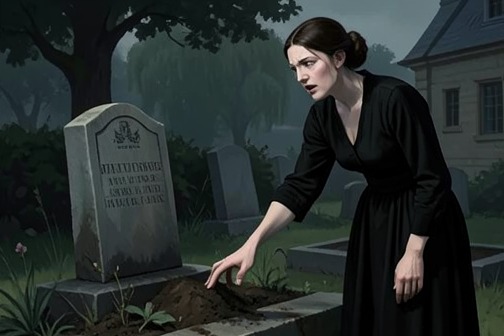
[Katy Miller](entity:character-recall-character-katy-miller-0af74c93589d)’s encounter with Ken Klein at Julie Miller’s grave overturns the certainty that had shaped her grief: the brother she believed had killed her sister is alive, denies the murder, and promises to find the person responsible. Because Katy has kept the meeting secret and is not entirely sure how to interpret it, the encounter does not settle Julie’s case. Instead, it gives [Will Klein](entity:character-recall-character-will-klein-eb8b6b999b8d) a new lead and draws Katy into the search.
## Background: [Grief](entity:state-recall-state-a922fa82e677) Preserved in Place
Julie’s murder remains present in the Miller family’s home and routines. The basement has been left as it was: the old couch, television, worn carpet, and trunk where Katy used to hide are still there, though no one uses them. The family must pass through the laundry room in that basement, making the preserved room part of ordinary life rather than a space they can simply avoid. Katy describes the household as moving carefully around the memory, afraid that disturbing it will bring the loss crashing down again.
The Miller family’s attachment to the house echoes the Kleins’ refusal to leave their own home after Julie’s body was found. Will Klein remembers that his father stayed despite his mother’s wish to move, treating departure as a surrender and as an admission of [Will](entity:character-recall-character-will-17d4ceb7f768)’s guilt. After the murder, the mother who had once been volatile became quiet and emotionally flat. These different family responses give Katy’s visit to the grave a wider context: grief has fixed both families to places and objects associated with the past, even as they continue living around what happened.
## Katy Returns to the Grave
After Will visited the Miller house, Katy went to the graveyard. She had not been there for years, and she did not enter through the front gate; she climbed over a fence and approached from the back. At a diner later, she tells Will about the visit while avoiding his eyes. Her hesitation makes the disclosure feel difficult to bring into speech: she has returned to a place she had kept away from, and what she saw there challenges a long-held belief.
Katy says she saw a man near Julie’s grave, standing beneath a willow tree roughly a hundred feet away. She initially presents the identification cautiously. Ken looked different, she explains, and she remembered him only a little from the past, supplemented by photographs. But when Will asks whether she is certain, she moves from uncertainty toward conviction: she says that the man told her he had not killed Julie. The meeting is therefore not based on recognition alone. Ken’s words, and the fact that he addressed Julie’s death directly, persuade Katy that the stranger really was Will’s missing brother.
## The Denial and the Promise
Katy reports that Ken first told her he had not killed her sister. She had hated him for a long time, but hearing him speak unsettled that fixed response. She was still about to scream when Ken came toward her, took her face in his hands, looked her in the eye, and promised to find the killer. He then let go and ran away. The encounter is brief: it offers no explanation of Julie’s death, no account of Ken’s disappearance, and no proof that his denial is true. Its force lies in the abrupt change from accusation to a promise that points toward future action.
The moment of direct eye contact matters to the way Katy tells the story. Earlier in the diner she has avoided Will’s gaze, a habit he recognizes from his work with young people at the shelter and does not force her to break. When she recounts Ken’s promise, however, she recalls that Ken held her face and looked directly at her. That remembered gesture does not verify his innocence; it helps explain why his claim reached her despite the years of hatred. The encounter leaves her with an experience she cannot easily reconcile with her prior certainty.
## Secrecy, Doubt, and a New Alliance
Katy has told no one about the meeting before speaking to Will. Even as she recounts it, she admits that sometimes she is not sure it happened. Her account preserves both the revelation and its limits: she believes she saw Ken, but the event remains private, uncorroborated, and emotionally difficult to trust. Ken’s denial changes what Katy thinks may be possible, not what has been established about Julie’s killer.
The disclosure becomes a turning point in Katy’s relationship with Will. She has returned to Julie’s grave after his visit, and now she brings him the information she has withheld from everyone else. When Will says that he is looking for Ken too, Katy asks to help. He agrees. Her request converts a solitary encounter into a shared investigation: Will gains Katy’s firsthand account, while Katy moves from carrying the memory alone to taking part in the search.
## Narrative Significance
The scene links the physical places where grief is maintained—the unchanged basement, the family home, and Julie’s grave—to the possibility that the past may still yield new knowledge. Katy’s visit does not provide closure. Ken disappears again before she can question him, and his promise to find the killer remains only a promise. Yet the encounter breaks the settled pattern of blame: the person Katy had condemned denies the murder, and she is willing to help investigate rather than simply repeat her old judgment.
Because the meeting reaches the reader through Katy’s later account to Will, its uncertainty is part of the event’s meaning. The reader receives no independent confirmation of what happened beneath the willow tree. Instead, the account shows how a brief, concealed meeting can alter the relationships surrounding an unsolved murder: Katy entrusts Will with her secret, Will accepts her help, and the search for Ken becomes a search in which Julie’s sister has a voice and a stake.
Event 5
Julie Miller Murder Case
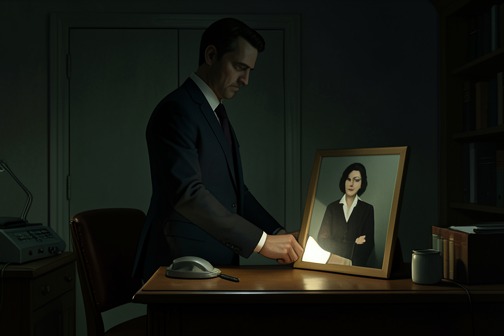
The [Julie Miller Murder Case](entity:event-recall-event-6d1afd8c7c65) becomes the hinge between a seemingly settled accusation and a wider pattern that investigators had not publicly acknowledged. Julie Miller was found dead at home, and her brother Ken Klein was treated as responsible. Years later, [Will Klein](entity:character-recall-character-will-klein-eb8b6b999b8d)’s questions about blood evidence and the discovery of other victims connected to the same sorority challenge the case’s original framing without, on the available evidence, resolving every question about what happened.
## The Case and Its First Interpretation
For years, the FBI’s account had led [Will](entity:character-recall-character-will-17d4ceb7f768) and the public to understand Julie’s murder as a random, solitary act of violence. That interpretation begins to unravel when Will learns of three young women associated with the same sorority house who have died. The shared affiliation changes the apparent shape of the case: what had looked like an isolated crime may belong to a larger pattern, one the FBI knew about but had kept from the family and the public.
The comparisons are not exact. Laura Emerson was strangled in another state, at another time, and found in a motel; the investigating agent points out that there were no signs of rape or sexual assault. Julie, by contrast, was found in her own home. Those differences had helped authorities see no true connection between the deaths. To Will, however, the sorority link makes the similarities impossible to dismiss. He also learns that [Sheila Rogers](entity:character-recall-character-sheila-rogers-7a874ade9e9d) belonged to the sorority, adding another connection that he presents directly to [Joseph Pistillo](entity:character-recall-character-joseph-pistillo-2805cc411582). The pattern is therefore not a solved explanation but a challenge to the official account—and to the secrecy that had kept the comparison out of view.
## The Competing Explanations and the Evidence
The case’s physical evidence also remains contested. In a later confrontation, Joseph Pistillo advances the possibility that Ken Klein and Julie had been sexually involved on the night she died, and challenges Will Klein over whether jealousy could have shaped his view of his brother. Will rejects that explanation as sufficient to account for the blood at the scene: he argues there was too much for it to have resulted from Julie fighting Ken off. He instead maintains that Ken was framed eleven years earlier, and suggests that someone may now be trying to repeat that history. These claims sharpen the dispute over the evidence, but the available account does not establish either Will’s framing theory or Pistillo’s proposed motive as fact.
The murder investigation sits within a wider criminal history that supplies context without conclusively explaining Julie’s death. A photograph shows Ken Klein, [John Asselta](entity:character-recall-character-john-asselta-17af0156334b), and [Philip McGuane](entity:character-recall-character-philip-mcguane-b17f487722ac) together as seventeen-year-olds in [Livingston, New Jersey](entity:location-recall-location-livingston-new-jerse-d4ff4b413b1c). Years later, according to Pistillo, Ken worked for [McGuane](entity:character-recall-character-mcguane-24bbc59e8e60) and was involved in the killings of Victor Dober and Curtis Angler; Ken was arrested on lesser charges six months before Julie’s murder. The account links Ken to McGuane’s criminal network, but does not establish that this earlier violence was a cause of Julie’s death.
That network also shapes the effort to find Ken. In a separate conversation, John Asselta says Will is the only person who can draw Ken out and that Will’s cooperation will be needed. The case thus turns on more than revisiting the original accusation: the search for an answer is entangled with old loyalties and criminal associations, while the evidence presented so far leaves the murder’s full circumstances unresolved.
## Sheila Rogers and the Wider Context
Sheila Rogers’s membership in the same sorority brought her into the web of connections surrounding Julie Miller’s case, but the evidence does not establish that the affiliation explains either death. Her earlier life offers a separate, documented context: she was a runaway from the Midwest, and [Squares](entity:character-recall-character-squares-7005432f23aa) recalled that her first arrest came when she was sixteen. Her file recorded three more arrests over the following eighteen months, associated with work for [Louis Castman](entity:character-recall-character-louis-castman-91bf916bc0c1). Castman later described meeting her at the Port Authority after she arrived by bus and using deception and coercion to gain control over her. The account places her among the young people vulnerable to exploitation after arriving in New York, rather than treating her history as evidence of a link to Julie’s murder.
According to Castman, Sheila later built a clientele, became connected with larger drug dealers, and began carrying or delivering drugs. He also said that she was trying to get clean and had powerful associates; when she was arrested carrying drugs, the attorney Lenny Misler represented her. These details complicate her place in the case’s emerging pattern: Sheila was connected to Julie through the sorority, but she also had a history shaped by exploitation, arrests, and criminal networks. The shared affiliation raises questions that the investigation had not answered; it does not, by itself, prove a shared killer or motive.
## The Social Terrain Around the Case
The case’s wider context includes the work of [Covenant House](entity:location-recall-location-covenant-house-49396337a75e), whose outreach van enters areas where runaway young people are especially vulnerable. The narration resists treating those young people as disposable: it first reaches for a weed analogy, then rejects it because it wrongly implies that some lives should be removed. A cancer analogy better conveys the danger described, with early intervention presented as essential to survival. This perspective does not establish a connection between Covenant House and Julie Miller’s murder; instead, it places the account of Sheila Rogers’s exploitation within a broader recognition of how quickly street life can deepen vulnerability and how difficult it can be to escape.
Event 6
John Asselta Returns and Attacks Will
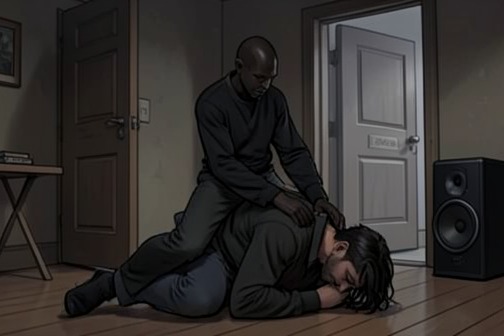
[John Asselta](entity:character-recall-character-john-asselta-17af0156334b)’s return is revealed through a sudden assault in [Will](entity:character-recall-character-will-17d4ceb7f768)’s apartment: the attacker is first an unseen force, then a voice Will recognizes, and finally the Ghost, using violence to make Will carry a threat to Ken. The scene turns a private home into the site of an old terror’s return and makes Will’s family part of the danger.
## The Attack and Recognition
Will finds his apartment door ajar and cautiously pushes it open. The music inside is louder than before; he guesses it is playing on the Bose CD player [Squares](entity:character-recall-character-squares-7005432f23aa) gave him for his birthday two years earlier. When Will puts his head through the doorway for a quick look, someone grabs him by the hair, yanks him forward hard enough to lift his feet off the ground, and sends him crashing face-first onto the floor. Before he can recover, the attacker straddles his back and tightens an arm around his throat. Will struggles, but cannot loosen the hold.
The assault is initially defined by what Will cannot see or control: his head is pulled back, the pressure builds, and he flails without moving his attacker. Recognition arrives through sound before sight. The man releases Will’s neck, rolls away laughing, and says, “You've gone soft on me, Willie boy.” Will retreats on his back and identifies him aloud: “John?” and “John Asselta?” The attacker has changed, but there is no mistaking him. The familiar voice punctures the immediate scene with Will’s memory of childhood fear.
John is the Ghost, a name others are afraid to use to his face. Will recalls that the Ghost terrified nearly everyone, while Will himself had been protected because he was Ken Klein’s little brother. That protection matters in the present: John has returned not simply to overpower Will, but to reach Ken through him. The violence therefore exposes how the brothers’ old connection remains a vulnerability even after Ken’s disappearance and concealment.
Will tells John to get out. John instead sweeps Will’s legs out from under him, pins him in an elbow lock, and bends the joint against its natural direction. While Will tries to relieve the pressure, John calmly orders him to tell Ken that there can be no more hiding. He warns that other people could get hurt, naming Will, Will’s father, Will’s sister, and “that little Miller vixen” Will met that day. The threat broadens the attack from punishment of Will into coercion aimed at everyone around him.
John releases Will’s arm and strikes him in the face with such speed that Will’s nose breaks. Will falls against the floor, dazed and only partly conscious; when he looks up, John has vanished. The attack leaves its message behind without requiring John to remain: Ken is being summoned out of hiding, and Will’s family and recent companion have been made explicit leverage.
## The Threat as Coercion
The encounter turns Will into an unwilling messenger. John does not ask him to find Ken or explain what has happened; he commands him to relay that hiding must end, then makes the demand credible by demonstrating how easily he can hurt Will. The warning extends beyond the brothers to Will’s father, sister, and [Katy Miller](entity:character-recall-character-katy-miller-0af74c93589d), whom John singles out by her connection to Will that day. It establishes a specific pressure point without confirming that any of them has already been harmed: their vulnerability is the threat. By the time John disappears, the confrontation has converted Will’s family ties from a source of protection into leverage against Ken.
## Family Tension Behind the Threat
The attack follows a period of strained silence at home. After Aunt Selma and Uncle Murray arrive, Will and Will and Ken’s father carefully avoid one another. Will remains certain that he loves his father, yet admits to an irrational resentment that began when his mother became ill. He wonders whether he blamed his father for failing to save her after Julie Miller’s murder, or for not being a strong enough husband to help her recover. The uncertainty matters: Will cannot make the feeling reasonable even to himself, but it has already altered how he sees his father.
Against that private, unresolved tension, John’s threat to Will and Ken’s father lands as more than a general warning. John has identified a person whose relationship with Will is already burdened by grief and unspoken blame, and he folds that fragile family bond into his effort to force Ken out of hiding. The sequence places Will’s inward conflict beside an immediate external danger without resolving either one: the attack makes the threat concrete, while the distance between father and son remains.
## Recognition and the Unresolved Threat
The scene’s decisive turn comes when the attacker’s voice makes the present intelligible as a return of the past. Until then, Will experiences an unseen assailant through force and pain; hearing “Hey'Willieboy” brings the old fear into the apartment before he can confirm the man’s identity. The recognition does not make John Asselta less frightening. It gives the violence a history: Will remembers the Ghost as a terror from adolescence and understands that his former safety came partly from being Ken Klein’s younger brother.
John’s composure sharpens the contrast between his measured instruction and the bodily harm that enforces it. He tells Will to carry a warning to Ken, then disappears after breaking Will’s nose. The abrupt absence leaves the demand unresolved, while the scene’s final emphasis remains on what John has set in motion: Will has been made the conduit between a man in hiding and the danger now directed at his family.
Event 7
The Chi Gamma Murder Connections Emerge
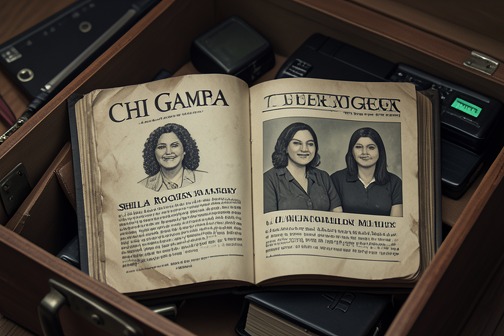
The [Chi Gamma](entity:organization-recall-organization-chi-gamma-99f32309f872) murder connections emerge when [Katy Miller](entity:character-recall-character-katy-miller-0af74c93589d) uncovers that [Sheila Rogers and Julie Miller](entity:relation-recall-relation-sheila-rogers-julie-4b0c69634a96) were not strangers: they had attended [Haverton College](entity:location-recall-location-haverton-college-cadc7f294e37), belonged to the same sorority, and had shared a room. [Rose Baker](entity:character-recall-character-rose-baker-4012cc109a2f)’s testimony then links the women’s college circle to the earlier killing of Laura Emerson. The disclosures transform a search for answers about Julie into a challenge to the official account of her murder, while leaving a crucial distinction unresolved: the evidence suggests a pattern and institutional concealment, but does not establish that Sheila caused the deaths or explain why the FBI withheld what it knew.
## The Sorority Connection
Katy finds the first link in an old Chi Gamma booklet kept in a trunk in the basement. It identifies [Sheila Rogers](entity:character-recall-character-sheila-rogers-7a874ade9e9d) as being from [Mason](entity:location-recall-location-83e28d154793), Idaho, records her communications major, and places her at Haverton College with Julie Miller. The biographical entry matters because it joins two lives [Will Klein](entity:character-recall-character-will-klein-eb8b6b999b8d) had understood separately. Sheila had been close to him, while Julie was the woman whose murder had remained an open wound; the booklet places both women within the same college organization.
Katy’s further recollection supplies the more intimate connection: Sheila and Julie had been roommates. The revelation stuns [Will](entity:character-recall-character-will-17d4ceb7f768), who had not known Sheila’s college history and learns that Sheila never told him about it. Katy, by contrast, remembers Sheila’s name from the sorority record. The exchange is not simply a new detail about their past. It changes the questions the investigation must ask: what happened within Chi Gamma, what Julie and Sheila knew about each other, and whether their shared surroundings connect their later fates.
## Rose Baker’s Account of Chi Gamma
Will and Katy bring the discovery to Rose Baker, a former figure in the sorority’s life. Rose recalls that Julie initially seemed fine at college, then began to withdraw from the group, cut classes, and end a relationship with her hometown boyfriend. Rose places this change in Julie’s junior year and emphasizes how late it came compared with the breakups she considered ordinary among first-year students. Her recollection gives the college connection a gradual shape: Julie’s distance from her earlier life preceded the murder, though Rose cannot explain it fully.
Rose says Sheila joined Chi Gamma in that same period and describes her as a bad influence. When asked about the rooming arrangement, she confirms that Sheila and Julie were roommates for a time. She also says she believed Sheila had brought something bad into Chi Gamma and, in retrospect, wishes she had removed her, but had no proof of wrongdoing. That qualification is essential. Rose’s suspicion supplies an atmosphere of unease, not evidence that Sheila committed a crime or that her influence caused Julie’s death. Her account leaves the supposed harm unnamed, preserving the gap between her judgment and what she could substantiate.
Sheila’s earlier history makes Rose’s characterization more complicated without resolving it. In the investigation, Will learns that Sheila had run away from the Midwest and was arrested for prostitution at sixteen; according to her file, she was working for [Louis Castman](entity:character-recall-character-louis-castman-91bf916bc0c1). Castman later describes meeting her after she arrived by bus and says she eventually became connected to larger dealers, began carrying drugs, and started getting clean. This history establishes the vulnerability and exploitation that marked Sheila’s youth, but it does not prove Rose’s allegation about her conduct at Chi Gamma. The contrast between the runaway known through police records and the college roommate named in a sorority booklet makes Sheila’s past harder to reduce to one description.
## Laura Emerson and the Pattern of Deaths
The conversation changes when Will tells Rose that Sheila has been found murdered. Rose’s reaction opens another line of history: she asks whether Will knows about Laura Emerson. He does not. Rose says Laura was found dead near her home in North Dakota, eight months before Julie, and had also been strangled. Until this disclosure, the investigation had treated Julie’s killing as though it stood alone; Laura’s earlier death gives the investigators a concrete basis for comparing the cases.
Rose says the police did not find Laura’s killer, but two FBI agents became involved. She does not remember their names. She recalls that the agents did not ask her about Laura, so she brought up the earlier strangling herself. Their response, as she remembers it, was that she should keep the information to herself because speaking about it could compromise the investigation. The sequence is consequential: Rose had information about a prior strangling, volunteered it to federal investigators, and was told not to discuss it. Her account does not identify the agents or disclose what they knew about the cases, but it establishes that the connection had been raised with the FBI.
## The FBI’s Withheld Account
For Will, the accumulated disclosures produce a sharp reversal. Three young women are dead, and he recognizes that all three were connected to the same sorority house. Laura’s death preceded Julie’s by eight months; Sheila, Julie’s former roommate, has now also been murdered. Taken together, those facts make a recurring pattern difficult to dismiss as coincidence. The novel presents this recognition through Will’s overwhelmed response, emphasizing how quickly the separate strands of his investigation have begun to converge.
Will’s further conclusion is that the FBI knew the murders were connected and had lied for years by allowing Julie’s case to be presented as a random, solitary act of violence. That is his inference from Rose’s account and the newly visible pattern, rather than a full explanation from the agents themselves. The precise reason for their silence remains unanswered. The discovery therefore shifts the mystery rather than closing it: investigators must consider not only who killed the women, but why the connection between their deaths was kept from the public and from those closest to Julie.
## Consequences for the Investigation
The revelations redraw the relationships at the center of the case. Katy’s memory and the sorority booklet provide documentary evidence of Sheila and Julie’s shared past; Rose supplies the testimony that links Chi Gamma to Laura’s earlier death and to the FBI’s response. Neither source answers every question, but together they redirect Will and Katy from a single murder toward an institutional and historical pattern.
The event’s significance lies in the tension between what can be established and what remains conjecture. Sheila and Julie were roommates; Laura was strangled before Julie; Rose told FBI agents about the earlier death and says they urged her to remain silent. Rose’s belief that Sheila was harmful to Chi Gamma is not proven, and the agents’ full knowledge or motive is not disclosed here. By keeping those distinctions visible, the discovery exposes how an official account can appear settled while crucial connections remain unspoken—and makes the search for the truth inseparable from the question of who controlled its telling.
Event 8
Katy Is Attacked in Will's Apartment
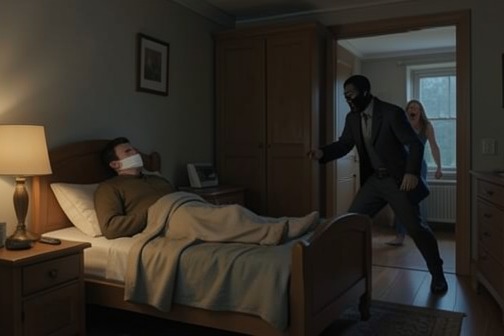
The attack on [Katy Miller](entity:character-recall-character-katy-miller-0af74c93589d) in [Will Klein](entity:character-recall-character-will-klein-eb8b6b999b8d)’s apartment turns an exhausted attempt to escape grief into a desperate struggle to keep her alive. Caught and silenced before he can reach her, [Will](entity:character-recall-character-will-17d4ceb7f768) must break free while the masked intruder moves from his room toward Katy.
## Background and the First Assault
After making sure Katy Miller was comfortable and settling her on the couch, Will Klein tries to read, goes online, exercises, and stretches rather than lie down and let grief catch him again. Sleep eventually overtakes him. Still asleep, he feels a jerk at his hand and the click of metal; when he stirs, the attacker leaps onto his chest, pins his shoulders, and cuffs his other hand to the bed. The assailant tapes Will’s mouth shut, wrapping the tape repeatedly around his head until he can neither speak nor cry out. His broken nose makes breathing painful, and his attempts to struggle against the cuffs and the attacker’s weight fail. Then Will remembers Katy alone in the other room. The intruder, visible only as a dark, masked shape, leaves him bound and enters the room where Katy is sleeping. Will hears her scream, abruptly cut short, and then hears her call out, “John”. The name offers no explanation, but the interrupted cries make the danger immediate: Will is trapped, unable to see what is happening to her or call for help.
## Breaking Free and Confronting the Attacker
With Katy’s screams cut short and no way to reach her, Will thrashes against the cuffs until exhaustion brings him close to giving up. He remembers a move [Squares](entity:character-recall-character-squares-7005432f23aa) had taught him: the plow pose, or Halasana, in which the legs swing over the head. Will uses the movement to twist himself off the bed and get upright despite his hands remaining cuffed and his mouth taped. He then drives his shoulder into the headboard and repeatedly rams the bed against the door. On the third impact, he pulls against the cuffs at the same moment the bed strikes the wall; the bed rails give way, freeing him. He opens the bedroom door and finds Katy on the floor, limp and apparently unconscious, while the assailant straddles her and chokes her.
Will launches himself at the attacker, who releases Katy, turns, and uses Will’s momentum to throw him across the room. Will lands in a reading chair, which topples beneath him; his head strikes a side table and then the floor. As he struggles to rise, he sees the black-clad assailant holding a knife and moving back toward Katy. Will scrambles across the floor for a gun. He manages to shift the tape enough to shout, “Freeze or I'll shoot!” but the attacker turns away and reaches for Katy again. Will finds the gun and fires without time to aim. The assailant jumps toward the door and escapes. Will considers shooting after him, then stops; Katy is not moving, and he turns his attention to her.
## Suspense and Restricted Perspective
The attack’s suspense is built from a sharp mismatch between what Will Klein can hear and what he can do: the assailant remains a black outline, while Katy Miller’s interrupted screams carry the danger across the apartment. Her cry of “John ” supplies a name without identifying the intruder or clarifying what connects him to her. The scene then changes its pace as Will sees the knife: although the next actions take only seconds, he experiences them as stretched into an alternate time, a formal pause that makes the choice before him feel impossibly narrow. The narration keeps that uncertainty intact; the threat is understood through fragments of sound, movement, and delayed sight rather than through an explanation of the attacker’s identity.
## The Aftermath and the Scene’s Turn
Will’s first response to physical violence is to shut down, a pattern he recognizes even as Katy’s cries force his attention beyond his own helplessness. The scene’s reversal is not that he becomes an assured fighter: he remains restrained, injured, and unable to see the intruder clearly. What changes is that he acts despite those limits, and then stops short of pursuing violence once the attacker flees. Katy is still motionless when the immediate struggle ends; the next chapter moves to an officer coming to hear Will’s account, carrying the attack from the apartment into its aftermath without yet resolving Katy’s condition.
Event 9
Nora and Sheila Exchange Identities
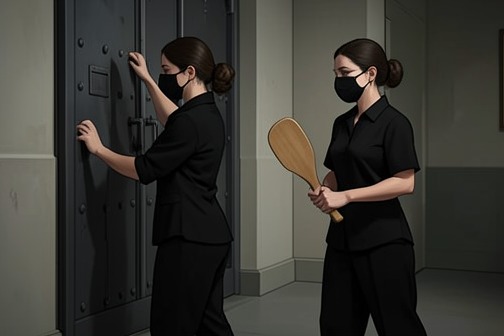
[Nora Spring](entity:character-recall-character-nora-spring-d34d365deb6c) and [Sheila Rogers](entity:character-recall-character-sheila-rogers-7a874ade9e9d)’s exchange of identities was a deliberate act of mutual concealment, prompted by the discovery that [Cray Spring](entity:character-recall-character-cray-spring-8f242debc8a0) had hired a private investigator and knew Nora’s whereabouts near Stockholm. By trading names, the women sought to redirect anyone pursuing Nora and make the search for either of them harder to follow.
## The Threat That Prompted the Plan
Nora recounts that a friend back home told her Cray had hired a private investigator and knew she was in the Stockholm area. The news frightened her, but she was also ready to move on. She had lived with Cray in Missouri and considered moving to New York as a possible route to safety; she also wanted an identity deeper than the surface-level false ID she already had in case Cray continued searching for her.
Sheila faced a related vulnerability. Her existing false identification amounted only to a changed name, and Nora describes her as being in the same predicament. The two women therefore had overlapping reasons to conceal themselves, even though the immediate threat described in Nora’s account came from Cray’s pursuit of her.
## The Exchange
Their solution was simple in form but consequential in what it concealed: Sheila became Nora Spring, and Nora became Sheila Rogers. The plan did not merely give Nora another name. It transferred each woman’s identifying name to the other, complicating the connection between a person being sought and the identity under which she might be found.
Nora explains the logic in two directions. If Cray came after her, he would find Sheila under Nora’s identity; if other people searching for Sheila Rogers found that name, the exchange would add another layer to the trail. The arrangement depended on the women presenting themselves under one another’s names, turning a shallow false ID into a reciprocal disguise.
## Sheila’s Earlier Vulnerability
The exchange acquires additional weight beside the account of Sheila’s earlier life. A street-outreach worker describes runaway teenagers as especially difficult to reach the longer they remain on the street, and recalls that Sheila had run away from the Midwest and entered street life after arriving by bus. Her first arrest was at sixteen; she was arrested several more times over the next eighteen months while working for [Louis Castman](entity:character-recall-character-louis-castman-91bf916bc0c1).
Castman later recalled meeting Sheila at the [New York Port Authority Bus Terminal](entity:location-recall-location-6e68826f7296) when she was about sixteen. His account presents the arrival of runaway teenagers as a point at which predatory adults could exploit their vulnerability. Sheila’s later work brought her into contact with more powerful dealers, and she was represented after an arrest by the mob attorney Lenny Misler. These details establish that the identity she gave up was already entangled with a dangerous past; they do not, however, make the exchange a solution to that history so much as another means of hiding from people who might search for her.
## Revelation and Significance
The plan is disclosed retrospectively when Nora explains how she came to live as Sheila Rogers. [Will](entity:character-recall-character-will-17d4ceb7f768) recognizes the arrangement as an exchange, and Nora confirms that she took Sheila’s name while Sheila took hers. The reveal changes the meaning of the names attached to the women: they are not reliable evidence of who is present, but identities deliberately passed between two people trying to evade pursuit.
The exchange joins personal trust to practical risk. Nora and Sheila share a strategy because each has reason to fear being found, yet its protection depends on the searchers mistaking one woman for the other. The account presents concealment not as a single invented name but as a relationship between identities, built to send a pursuer toward the wrong person and leave the real one harder to locate.
Event 10
The Ghost Confronts Will and His Father at the Ballpark
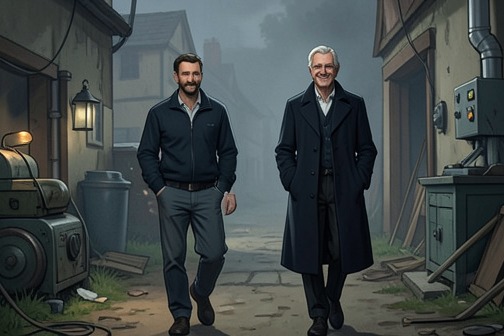
[The Ghost Confronts Will and His Father at the Ballpark](entity:event-recall-event-will-b280fffe4232) is an abrupt encounter in which a quiet departure becomes a confrontation over family history and Julie Miller's death. [Will and Ken's father](entity:character-recall-character-will-ken-b9402c612f1e) has just agreed to go home after a difficult conversation with [Will](entity:character-recall-character-will-17d4ceb7f768). On their way from the bleachers toward the path, they find the Ghost waiting in the open, smiling with his hands in his pockets. The scene brings the Ghost into the family's immediate space, but leaves the purpose of his visit—and the responsibility he raises—unsettled.
## The Interrupted Departure
Will and Ken's father closes his eyes, then stands and proposes that they go home. Will wants to ask more, but recognizes that the moment is not right. The father has difficulty descending the rickety bleacher steps; Will offers a hand, which the father refuses. They reach the gravel and turn toward the path before seeing the Ghost. That sequence matters: the encounter does not begin with either man seeking him out. It interrupts their attempt to leave together, just as their private exchange seems to be ending.
Will initially thinks the figure might be an illusion, but his father's reaction confirms that the Ghost is there. The Ghost greets the sight of father and son together with mock tenderness, then addresses the father directly. The father moves in front of Will and demands to know what the Ghost wants. His gesture makes the family relationship visible as an immediate protective action; the Ghost, however, treats that bond as material for provocation rather than as a boundary.
## The Father's Past Made a Taunt
The Ghost invokes a Little League game and repeats an old recollection about Will striking out, when a roll of Life Savers supposedly made him feel better. He then redirects the memory toward the father, recalling a time when the father arrived at a game drunk and urinated beside the snack bar. He says Mrs. Tansmore nearly had a stroke. The specific, embarrassing anecdote is presented as a shared past that the Ghost can use to unsettle the family in public. Will and his father remain rooted in place while the Ghost laughs at the memory; the father sets his jaw and again asks what he wants.
The taunt does not answer that question. Instead, it shows the Ghost steering the encounter according to his own agenda, as Will observes that he will not be derailed. The father tries to draw him back to the reason for his arrival, but the Ghost moves from the old ballgame story to the loss at the center of the family's history. The familiar setting therefore becomes less a source of shared comfort than a means of reopening old grievances.
## Julie Miller and the Unanswered Accusation
Will identifies Julie Miller as the answer to the question the Ghost has raised and asks whether the Ghost killed her. The Ghost does not give a clear yes or no. He replies that only one of the people present is to blame, a deliberately indirect answer that keeps responsibility in dispute rather than establishing what happened. Will's father steps between them and tells the Ghost to stop.
The Ghost continues, accusing the father of having been supposed to fight for Julie and protect her. Will registers the accusation as deeply painful, even though it comes from the Ghost. The exchange makes Julie's death the emotional center of the meeting, but supplies no definitive account of the killing or proof against either man. The Ghost's words press a charge; the father's intervention blocks the conversation without settling it.
## The Ghost Leaves
When Will's father asks why he has come, the Ghost admits he is not sure. The father tells him to leave the family alone and offers himself as the person the Ghost can take instead. The Ghost rejects that offer, saying he does not want the father and prefers him as he is. The remark is ominous, but its meaning remains unexplained; it does not develop into a stated plan or physical attack in this encounter.
The Ghost gives a small wave and walks into the wooded area, gradually disappearing from view. Will and his father remain where they are briefly, then the father starts back toward the path and tells Will they are going home. The ending returns them to their interrupted departure without giving Will the answers he sought. Structurally, the scene moves from family recollection to accusation and then withdrawal: the Ghost exposes the persistence of the past, but leaves the central question of Julie Miller's death unresolved.
Event 11
Will Reunites with Nora and Learns Her True Identity

[Will Klein](entity:character-recall-character-will-klein-eb8b6b999b8d)’s reunion with [Nora Spring](entity:character-recall-character-nora-spring-d34d365deb6c) resolves the apparent disappearance of [Sheila Rogers](entity:character-recall-character-sheila-rogers-7a874ade9e9d) by revealing that the woman [Will](entity:character-recall-character-will-17d4ceb7f768) loved had been living under Sheila’s name. Their encounter is both an emotional return and a disclosure of deliberate identity exchange: the real Sheila is dead, while Nora had survived by making herself difficult to find. The truth restores Will’s relationship with Nora, but it also recasts the search that brought them together as a story of women using borrowed identities to escape danger.
## The Search for Sheila
After a night in which Will could not face returning home, [Squares](entity:character-recall-character-squares-7005432f23aa) called with the news that the searchers had found Sheila. A detective agency Squares used had traced her to the Regina Hotel, less than a mile from Will’s apartment. The apparent proximity overturned the assumption that she had fled across the country: she had remained nearby, close enough for the search to end in the same city where it began.
The trail was practical rather than dramatic. Since the death of the woman whose identity she had taken, Nora had become careless: she deposited money at First National and obtained a debit Visa card. In a city where most lodging required a card or at least an imprint, even a transaction that did not pass through a system could leave a trace. The habits that made ordinary life possible also made concealment harder. The discovery depended not on a confession or a confrontation, but on the mundane records left by trying to live under an assumed name.
Abe Goldberg and [Sadie Goldberg](entity:character-recall-character-sadie-goldberg-402a0067f01a) had sold her identification. Nora had reason to believe they would keep silent: they were discreet, and their connection to the searchers ran through their friendship with Squares and [Raquel](entity:character-recall-character-raquel-7e2d9af765c3). They also partly blamed themselves for what they believed was Sheila’s murder. Their silence helped Nora stay hidden, but the later investigation shows that an assumed identity could not guarantee safety indefinitely.
## The Reunion
Will did not know whether the woman he had seen might have spotted him or used another floor as a decoy. Unable to go home, he watched the passing pedestrians until he recognized her in the crowd. He was overwhelmed and could not move; Nora crossed the distance between them, and he struggled to contain his cry as she reached him and pulled him close. They held each other without speaking for a long while. The scene makes recognition physical before it becomes explanatory: the return of the woman Will loves arrives first as an embrace, not an account of where she has been.
They met again in the lower level of a Starbucks on Park Avenue South, in a corner by an emergency fire exit. Nora watched the stairs, still worried that she had been followed. They sat close together and held hands while Will tried to absorb both his confusion and his happiness. He wanted answers, but the revelation could not erase the immediate fact that she was back. Her confession began plainly: “My real name is Nora Spring.” The name that had brought Will to the hotel was not hers; the person he had found was the woman he had known before the disappearance.
## The Identity Exchange
Nora explained that she had learned the truth about Sheila at Sheila’s funeral, when she saw the body. She had wanted to tell Will, particularly after hearing that Sheila had been murdered, but had not done so. Her silence had prolonged Will’s mistaken belief about who had disappeared and who had died. The funeral thus functions as the point where the identities could no longer be treated as interchangeable for Nora, even though she continued to live publicly as Sheila.
The exchange had begun as a protective plan. Nora was afraid that [Cray Spring](entity:character-recall-character-cray-spring-8f242debc8a0) would keep hunting her, and she believed a move to [New York City](entity:location-recall-location-7a11f2949ca3) might make her safer. She needed more than a superficial name change. Sheila, too, had a weak false identity, and the two women agreed to switch: Nora became Sheila Rogers, while Sheila took the name Nora Spring. If Cray came after Nora, he would find Sheila instead; if people searching for the couple located someone called Sheila Rogers, the extra layer of confusion might obstruct them as well. The plan joined personal escape to misdirection, but it also transferred one woman’s name and history to the other.
## The Lives Behind the Names
The revelation gains weight from what Will and the reader already know about the real Sheila. Squares’s search had placed her in the history of street exploitation: she had run away from the Midwest, and her first arrest came at sixteen. Over the next eighteen months, she was arrested three more times for prostitution while working for [Louis Castman](entity:character-recall-character-louis-castman-91bf916bc0c1). Castman later described meeting her after she got off a bus and exploiting her through violence, drugs, and a staged sexual film. Her borrowed identity was therefore not a neutral disguise; it was the name of a young woman whose life had already been shaped by predation and vulnerability.
The people around the women also connect the hidden identities to the Klein family. Nora confirms that Sheila and her husband had a daughter named Carly; Will recognizes that the husband was his brother, Ken Klein. Nora had become close to Sheila and, though Ken took longer to trust her, had also grown close to him. This makes her role more than that of a stranger who borrowed a dead woman’s name: she had lived within the family’s intimate circle, while Will remained unaware of the identity beneath the one he loved.
The reunion resolves one question while exposing another kind of cost. Nora’s return gives Will the person he believed he had lost, but the path back to him runs through a false identity, a murdered friend, and a family history he had not understood. The name Sheila Rogers had concealed Nora from those who might pursue her and separated Will from the truth. When Nora finally gives him her real name, their embrace can resume the relationship, but it cannot make the years of concealment disappear.
Event 12
The Ghost Kidnaps Katy and Forces Will to Contact Ken
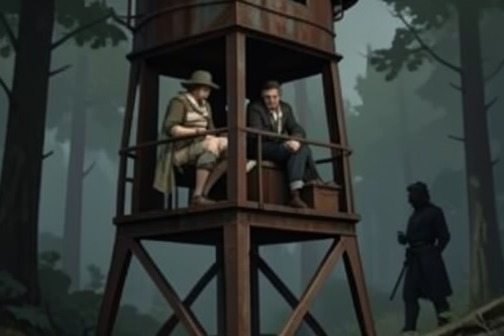
The Ghost’s abduction of [Katy Miller](entity:character-recall-character-katy-miller-0af74c93589d) and forced contact between [Will Klein and Ken Klein](entity:relation-recall-relation-will-klein-ken-klein-25226f64d7e5) turns an isolated woodland hideout into a coercive communications post: Katy’s safety becomes leverage, [Will](entity:character-recall-character-will-17d4ceb7f768) becomes the intermediary, and Ken’s survival is confirmed through the very channel The Ghost has learned to exploit.
## Arrival at the woodland tower
After about an hour in a Ford Taurus, Will arrives in thick woods where pine needles cover the ground and dense green trees surround a small aluminum watchtower. The structure stands on a platform about ten feet above the ground. Its functional, neglected appearance, with rust at its corners and door, contrasts with the ordinary setting of an office or interview room; Will and Katy are being held at a remote site under The Ghost’s control. The details establish the conditions of the encounter without suggesting that Will knows the precise location.
The Ghost has Katy in custody and presents her presence as an incentive for Will to cooperate. He says he needs Will’s help and makes clear that Katy is part of the pressure being applied. Will responds by warning him not to hurt her, but The Ghost uses violence against Will to overpower his resistance. The episode therefore begins not as a voluntary negotiation but as a demand backed by the threat of harm to both captives.
## The demand for Ken
The Ghost explains that Will is there because he wants to contact Ken. Ken had refused to meet with his attorney, whom The Ghost’s side had approached, apparently suspecting that the proposed meeting was a trap. The Ghost now hopes Will can persuade his brother to meet with them. His stated aim is for Ken to give up the information he has and promise to disappear again; he presents that outcome as a way for everyone to move on.
Will does not trust this offer. He recognizes it as a lie and believes The Ghost intends to kill Ken and the others regardless of what Ken agrees to do. That private judgment gives the exchange its central conflict: The Ghost needs Will to make contact, but Will has no reason to believe that cooperation will secure anyone’s safety. When The Ghost places a lasso around Katy’s neck, the threat shifts from a general demand to an immediate demonstration of the leverage he holds. Will acknowledges the imbalance rather than mistaking it for a genuine choice.
## Ken’s coded channel
The Ghost describes how Ken communicates through the Internet newsgroup rec.music.elvis, a board for Elvis fans. Rather than approach his attorney directly, Ken can receive a date and time posted under a code name, then use instant messaging to contact the attorney. The apparently ordinary subject of the forum conceals a practical rendezvous system. The Ghost’s knowledge of that system shows that Ken’s efforts to remain hidden have not made him unreachable; they have instead given his pursuers a channel to target.
Once the laptop is online through a remote modem, The Ghost opens the exchange and prompts Ken. Will watches the screen while The Ghost types. Ken first demands confirmation of who is contacting him. The reply, FRANK EL BAR MITZVAH. GO HOME NOW., convinces Will that the person answering is Ken. The coded response is decisive for the scene: Ken is alive and communicating, and the contact has reached him despite his earlier refusal to meet with his attorney.
## Threats and the cutoff
Ken initially tells the other party that he is signing off and reassures his brother. The Ghost answers by threatening Will’s life if Ken disconnects. Ken then asks who is speaking. The Ghost identifies himself indirectly with a Casper the Friendly hint, turning the exchange into a personal confrontation rather than a neutral request for a meeting. The message also makes clear that The Ghost is willing to expose his presence to Ken in order to keep him engaged.
The Ghost follows with a further threat: Ken has three hours before [The Yard](entity:location-recall-location-the-yard-83fc4d103c53) becomes part of what happens next. The preceding message invokes a staged escalation of physical harm, but the scene’s important consequence is the ultimatum and deadline, not a completed act of violence. The Ghost then disconnects, closes the laptop, and treats the exchange as a success. No meeting is secured in this episode, and Ken’s next move remains unresolved; what The Ghost has achieved is to establish contact, demonstrate that he can reach Ken through the coded forum, and make Will’s life part of the pressure campaign.
## Significance
The encounter reverses the apparent advantage created by Ken’s secrecy. His coded use of an Elvis newsgroup has let him communicate without openly approaching his attorney, yet The Ghost has found a way to turn that protection into an instrument of pursuit. Will’s family connection supplies the missing leverage: The Ghost does not ask Will to locate Ken through independent investigation but forces him to participate in a channel Ken already monitors.
The scene also makes the difference between contact and safety unmistakable. Ken’s response confirms that he is alive, but it does not bring the brothers together or end the threat. Instead, the exchange exposes Ken to The Ghost’s ultimatum while leaving Will and Katy in captivity. The Ghost’s satisfied reaction at the cutoff underscores the immediate result: he has compelled a response, not resolved the conflict.
Event 13
Will and Katy Escape the Forest Water Tower

[Will](entity:character-recall-character-will-17d4ceb7f768) and [Katy Miller](entity:character-recall-character-katy-miller-0af74c93589d)’s escape from the forest water tower turns a guarded captivity into a narrow, hard-won flight: Will frees Katy, gets her off the unstable platform, and stays behind long enough to stop their guard from following. The apparent opening is not safety. The Ghost has driven away, but he remains close enough to watch the pair emerge from the woods and return to deal with the traces of their escape.
## The opening Will recognizes
Will works out the immediate situation from the departure of a car: two men had been there, and if one car has driven off, only one man can remain. He tells Katy that the Ghost is gone and clarifies that the driver is still there. The distinction matters. The most dangerous pursuer has temporarily left, but the captives have not been abandoned, and the remaining driver is still a threat.
Will picks up a large piece of broken glass and uses it to saw through the rope binding Katy. Once she is free, she rubs her wrists. Will asks whether she will go with him; she nods. He has no assurance that the driver is unarmed or that their captors will avoid hurting them. His working assumption is that they need both of them alive, particularly Will, to serve as bait for Ken. That possibility gives the escape its urgency: their captors’ need to keep them alive may create an opening, but it does not make waiting safe.
## A precarious route down
The structure offers one back window, and Will’s first plan is to get outside and crawl through the woods as quietly as possible. When he sees the driver sitting on a tree stump, with his back turned and a cigarette, Will changes the plan from a direct approach to a careful exit. He puts the broken glass in his pocket, signals Katy to crouch, and eases open the door. Its creak makes every movement risky; he opens it only a foot, enough for them to squeeze through.
They crawl across the aluminum platform, whose smooth surface makes the movement easier, and reach the side of the shack. Then a supporting beam gives way. The platform sways, and the driver hears the noise. Will and Katy duck beside the structure while he looks toward the apparently closed door and empty platform. Their brief concealment depends on the driver not seeing them, but the failing structure makes remaining there increasingly dangerous.
Will points Katy toward a pole at the back corner and has her descend first. As she slides down, the platform lurches again; a screw comes loose, and the driver begins moving toward them. Will tells Katy to jump and run. She lands and looks back, waiting for him, but Will urges her to get help and go. The separation is tactical, not a change of purpose: he needs her clear of the platform before he can keep the guard occupied.
## Will holds off the guard
The driver tackles Will before he can follow Katy. They grapple on the ground, and Will concentrates on keeping hold of the glass. When the man kicks at his ribs, Will traps the foot against his stomach and uses the glass to wound the man’s leg. The intervention stops the pursuit, but it also forces Will to confront the point at which escape might become killing. With the driver no longer able to threaten them in the same way, and with the Ghost potentially able to return, Will chooses to run rather than strike again.
After going twenty or thirty yards, Will looks back. The driver is not pursuing him; he is struggling to crawl. Will resumes running and hears Katy calling from nearby. She has waited for him and directs him onward. They run together through the woods, dodging roots and branches without falling, until, fifteen minutes later, they emerge onto [Hobart Gap Road](entity:location-recall-location-hobart-gap-road-5742f99e237d). The escape therefore depends not on a clean break but on a sequence of shared decisions: Katy follows Will’s instructions, Will buys her time, and she remains close enough to reunite with him.
## Escape without safety
The arrival at the road initially marks a physical escape from the guarded structure, not proof that the threat has passed. The Ghost is there when Will and Katy come out of the woods. He watches from a distance, smiles, returns to his car, and drives back to begin cleaning up. The blood left by the encounter was unexpected, and the Ghost’s reaction registers Will as someone who has continued to surprise and impress him. The scene thus closes on an unsettling reversal: Will and Katy have escaped the immediate enclosure, while the Ghost has neither lost track of them nor disappeared from the larger danger.
The event’s tension comes from the difference between being out and being safe. Will’s escape plan repeatedly changes as the door, the platform, and the collapsing support undermine his assumptions. The broken glass first serves as a tool for freeing Katy, then as protection against the driver; Will stops using it when the man is no longer a threat. Katy’s escape is not presented as a solitary rescue: she obeys the signal to go, but waits for Will and helps guide their final flight. Their arrival at Hobart Gap Road resolves the immediate ordeal, while the Ghost’s watchful return keeps the wider pursuit open.
Event 14
Ken Reunites with His Family
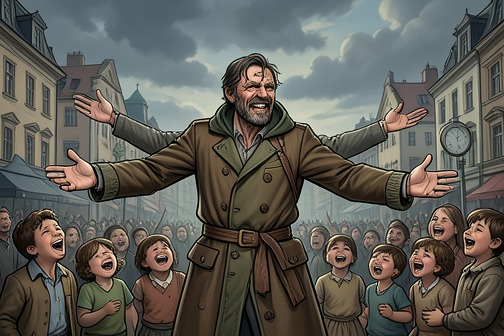
[Ken Reunites with His Family](entity:event-recall-event-ken-a4765abccee7) is the long-awaited meeting of Ken Klein with [Will Klein](entity:character-recall-character-will-klein-eb8b6b999b8d), [Melissa Klein](entity:character-recall-character-melissa-klein-6a863842cd00), and their father after eleven years of separation. Carefully arranged at the former [Camp Millstone](entity:location-recall-location-camp-millstone-583ba7b886db), the reunion converts cautious online contact into physical presence: Ken arrives, [Will](entity:character-recall-character-will-17d4ceb7f768) runs to him, and the family closes the distance through embraces and laughter. The scene offers reunion not as a clean erasure of the years apart, but as an emotional return made possible by patience, secrecy, and a place that binds childhood memory to the present.
## Separation and the need for closure
The reunion follows a prolonged period in which Will remained with his father and [Melissa](entity:character-recall-character-melissa-64b753949b14) while Ken lived apart from them. Will had spent the last eleven years with his mother, and he missed Ken intensely; he believed Ken might have missed the family even more. Ken, though still cautious, also wanted the separation to end. Their contact had developed through an online board devoted to Blue Oyster Cult, the band behind Ken’s favorite song, “[Don't Fear the Reaper](entity:expression-recall-expression-don-t-fear-the-rea-1b4c5a1b61dc).” The brothers found a small number of people using the board, arranged times to exchange instant messages, and eventually used that channel to prepare for meeting again.
The wish for closure sits against a family history in which tragedy had made ordinary spaces difficult to leave behind. After Julie Miller’s body was found, [Sunny](entity:character-recall-character-sunny-8770992776bb)’s usual volatility gave way to a subdued, passionless manner. Will’s father, by contrast, refused to leave the family house even after its windows were shot out with a BB gun. To him, moving would have meant surrender, an admission of his son’s guilt, and betrayal. The house became one example of the family’s difficulty separating memory from the place where it had taken hold.
That attachment to painful spaces appears in [Katy Miller](entity:character-recall-character-katy-miller-0af74c93589d)’s account of her own home. The basement remained unchanged, with its old couch, television, worn carpet, and trunk; the family still had to pass through it to reach the laundry room. Katy described the household as moving carefully upstairs, afraid of falling back into the past. When she asked her mother why she had stayed afloat after tragedy, her mother compared grief to being dropped into a stormy sea: survival, and the need to raise another child, had kept her going. These are not the circumstances of Ken’s arrival, but they illuminate the burden of family history that makes this meeting more than a simple visit. It is a step toward ending a separation without pretending that loss has vanished.
## Choosing the reunion place
The location joined the brothers’ shared past to the practical demands of a private meeting. When Will was twelve and Ken fourteen, they attended Camp Millstone in Marshfield, Massachusetts. Its cabins bore college names: Ken stayed in Yale and Will in Duke. They remembered basketball and softball, blue-gray color wars, unappealing meals, and the camp drink nicknamed bug juice. Their counselors could be both entertaining and cruel. Despite the rough food and the reservations Will later had about sending a child to sleep-away camp, the brothers had loved their time there.
Four years before the reunion, Will had taken [Squares](entity:character-recall-character-squares-7005432f23aa) to see the camp. It was in foreclosure, so Squares bought the property and transformed it into an upscale yoga retreat. He built a farmhouse on what had been the soccer field. The site had only one route in or out, and the farmhouse stood in the middle of the field, giving a clear view of anyone approaching. Its seclusion served the family’s need for caution; its history gave the gathering a personal meaning that a merely convenient safe location would not have carried.
The family’s preparations were deliberately restricted. Melissa flew from Seattle but landed in Philadelphia because they were especially wary about the arrangements. Will, Melissa, and their father met at the Vince Lombardi Rest Stop on the [New Jersey](entity:location-recall-location-39f2e21cff7b) Turnpike and drove to the retreat together, with Will driving and his father beside him. Nora, Katy, and Squares knew about the reunion and were traveling separately, but they would not join until the following day. The first evening was reserved for the immediate family. Even with a plan in place, the drive was quiet, and Will would not trust the reunion as real until he saw Ken, embraced him, and heard him speak.
## Ken arrives
Five minutes after Will’s father wondered why the nightmare did not feel close to ending, a car approached. The family gathered at the window. Will pulled back the curtain and saw a gray Honda Accord, an inconspicuous choice, come to a stop at dusk. He wanted to rush outside but stayed at the window as several seconds passed. The delay held the family between expectation and confirmation: the car had arrived, but Ken had not yet appeared.
Then the driver’s door opened and Ken stepped out. His familiar, confident smile was enough for Will to recognize him and give way to joy. Will ran for the door; Ken was already sprinting toward the house. He burst inside and tackled his brother, and the two rolled across the carpet laughing. Will’s response recalled the ease of childhood: the eleven years between them seemed to fall away in the first rush of their reunion.
The embrace expanded into a family scene. Their father joined them, then Melissa. Will remembered it in blurred snapshots: Ken hugging their father; their father holding Ken around the neck, kissing the top of his head with his eyes closed as tears ran down his cheeks; and Ken lifting Melissa into the air as she cried and patted him, as if checking that he was truly there. The reunion’s emotional force is carried by these distinct gestures. Their father’s tears give visible form to years of separation; Melissa’s touch registers the need to verify what joy has not yet made easy to believe.
## What the reunion restores
After the first rush, the family eventually calmed enough to sit on a couch. Ken kept Will close and repeatedly put him in a headlock, giving him the affectionate childhood teasing called “nuggies.” The roughhousing did not undo the history that had divided them; instead, it made their renewed closeness tangible in a familiar brotherly ritual. For Will, even being struck lightly on the head could feel good when it came from Ken.
The reunion therefore combines return with the recognition of time lost. Its setting recalls the brothers as boys, while the family’s cautious journey and Will’s refusal to believe until Ken appeared preserve the strain of their adult separation. The night begins as a meeting reserved for the immediate family, not yet the larger gathering planned for the following day. Its decisive change is intimate: Ken is no longer only a voice reached through scheduled online messages or the absent brother Will has missed for eleven years. He is present in the room, embraced by his family, and again participating in the gestures through which their bonds were first made.
Event 15
Staged kidnapping of Will and Melissa
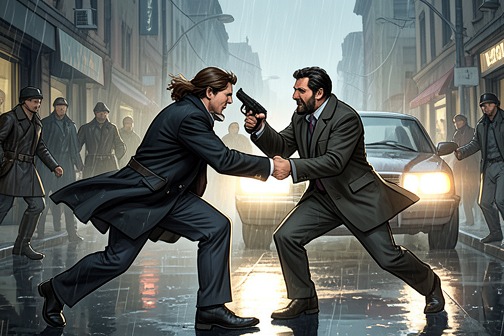
The staged kidnapping of [Will](entity:character-recall-character-will-17d4ceb7f768) and [Melissa](entity:character-recall-character-melissa-64b753949b14) is revealed as an engineered confrontation: Katy and the Ghost used the appearance of mortal danger to make Ken meet Will, believing that family loyalty alone would not draw him out. The explanation turns Will’s apparent rescue from a straightforward abduction into a plan whose success depended on his brother’s hidden connection to the Ghost—and whose violence exceeded what its organizers intended.
## The Kidnapping as a Ruse
Katy explains that she and the Ghost arranged the kidnapping and that the Ghost let Will and Melissa escape. The abduction was therefore staged rather than an attempt to hold them indefinitely. Will initially understands the event as a genuine kidnapping by the Ghost; Katy’s disclosure makes clear that the escape was part of the arrangement.
The distinction between appearance and intended harm is clearest in the driver’s role. He was meant to make the kidnapping look convincing, not to become the target of an actual attack. Katy says that neither she nor the Ghost expected Will to hurt him so badly. The plan manufactured danger to persuade Ken to act, but Will’s response carried consequences beyond the performance they had devised.
## Why Ken Was the Target
Katy identifies the purpose of the scheme as getting Ken to meet Will. In her account, Ken would not put himself in danger simply to save his brother. The kidnapping supplied the exceptional circumstance that might overcome that refusal: the appearance that Will’s life was at risk.
The explanation also links the staged abduction to an earlier effort. Katy says that a man had been stationed at the yard that night in case Ken came, but nobody arrived. The failed wait and the later kidnapping show two attempts to bring about the meeting: first, a man was placed at the yard as a contingency; then, a fabricated emergency was used to create pressure that an ordinary meeting had not produced.
## Will’s Recognition and the Plan’s Cost
Katy delivers the explanation directly to Will, closing the gap between them and holding his gaze as she says Ken ran because he killed Julie, not because he feared [McGuane](entity:character-recall-character-mcguane-24bbc59e8e60) or being framed. She gestures toward Ken while describing why the kidnapping was arranged, making the brother’s presence the immediate focus of the revelation. Will resists the explanation at first, returning to the fact that the Ghost had kidnapped them; Katy answers by distinguishing the planned deception from the unexpectedly serious harm Will caused the driver.
For Will, the disclosure overturns his understanding of the event. What had seemed to be an attack followed by escape becomes a contrivance intended to force a meeting with Ken. The plan exposes both the limit of Will’s hope that Ken would come for him without coercion and the danger of using a staged threat to overcome that limit: the intended deception did not prevent real injury.
Event 16
Confrontation between Katy Miller and Ken Miller
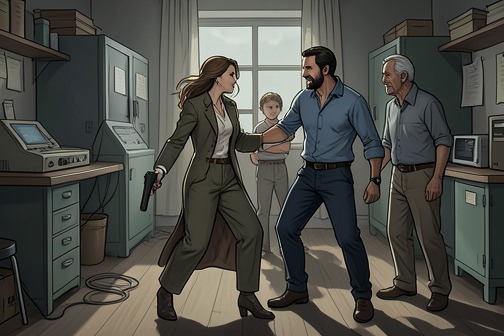
The confrontation between [Katy Miller](entity:character-recall-character-katy-miller-0af74c93589d) and Ken Klein turns the family’s demand for justice into an immediate threat of further violence. Convinced that Ken killed her sister Julie Miller and that the FBI has let him go, Katy says she will shoot him. [Will](entity:character-recall-character-will-17d4ceb7f768) and Ken’s father try to stop her, and Will then has to stop Ken from shooting her in return. The encounter ends not with another death or another escape, but with Ken putting the gun in Will’s hand and staying until the police arrive.
## Causes and Stakes
Katy’s confrontation comes from the conviction that Ken killed Julie. The scene makes that conclusion explicit for Will: as he looks from Katy to [Melissa](entity:character-recall-character-melissa-64b753949b14) and his father, he recognizes the truth of her accusation. Katy explains that her family needs closure and that, because the FBI has set Ken free, she believes she has no choice but to act against him herself. Her decision is not presented as a misunderstanding or a sudden quarrel; she connects it directly to Julie’s death and to the failure of the legal outcome to provide the justice she seeks.
For Katy, the stakes are therefore both personal and moral. She is trying to answer the killing of her sister, but chooses a response that would make her a killer too. Ken’s presence brings the buried family crime into the open, while the possibility of Katy firing makes the consequences immediate. The scene puts two claims into collision: Katy’s insistence that Ken must answer for Julie’s murder, and the danger that private retribution will create another irreversible loss.
## Katy’s Decision and the First Shot
Will’s father asks Katy what she is going to do, and she answers that she is going to shoot Ken. He acts before she can carry out that intention, crying out and diving toward her. Katy fires. The bullet strikes Will and Ken’s father in the leg, but he continues toward her and knocks the weapon from her hands before going down. His intervention disrupts the confrontation, but it does not end the danger: the momentary diversion gives Ken time to draw his own gun.
The father’s action is a sacrifice made to prevent Katy from shooting Ken. It also changes the immediate balance of the scene. Katy is disarmed, but Ken now has the weapon and turns his attention to her. The attempt to stop one killing has opened the way to another, making Will’s intervention decisive.
## Will Stops Ken
Ken aims at Katy without hesitation. Will jumps toward him as he pulls the trigger, striking his arm so that the shot goes wild. The brothers fall and struggle on the ground. Ken elbows Will in the stomach, gets back up, and points the gun at Katy again. Will tells him no and grabs him, ordering Katy to run. Ken gains the advantage and flips Will over; when their eyes meet, he explains that Katy is the last remaining thread connecting him to his past.
That admission clarifies the force behind Ken’s intended act without making it an excuse. Katy is not only the sister of the woman he killed; she is also the last link to the life and crime from which he has spent years fleeing. Will refuses to let that connection end in her death. When Ken continues to insist that he has to shoot her, Will holds on and says that he will not let him kill her. In this struggle, Will’s loyalty to his brother does not mean protecting Ken from the truth or enabling another escape. It means physically preventing him from committing another murder.
## The Gun, the Promise, and Arrest
After the immediate struggle, Ken demands that Will promise never to tell his daughter about him and never to let her visit him in prison. He asks Will to raise her as his own. The plea places the future of Ken’s child alongside the consequences of his crime: Ken wants Will to take on the parental role while keeping the child apart from her father. Will does not agree before the gun is surrendered; he asks Ken to give it to him first and says he will promise.
Ken looks down at Will, pushes the gun into his hand, and kisses him. Will embraces his brother as Ken cries against him. The embrace does not erase what Ken has done: the narration identifies him as a murderer, even as the brothers hold each other until they hear the sirens. Will then urges Ken to run, but Ken does not move. Will cannot know exactly why. Ken stays until the police arrive and pull him away.
## Consequences and Significance
The confrontation resolves its immediate danger through a sequence of interventions rather than through a change in what the characters know. Katy’s attempt to avenge Julie is stopped, Will’s father is wounded, and Will prevents Ken from killing Katy. Most consequentially, Ken relinquishes his weapon and remains at the scene to be arrested instead of fleeing once more. The choice closes the encounter with custody rather than another pursuit, though it does not undo the murder or the damage within the family.
The scene also defines the limits of Will’s brotherly loyalty. He holds and comforts Ken, yet he has just risked himself to stop Ken from killing Katy, and he does not conceal the fact that Ken killed Julie. The embrace and the arrest stand together: love persists, but it cannot make Ken innocent or restore the dead. Katy’s demand for closure, her father’s intervention, and Will’s refusal to let either sibling commit another killing leave the family facing the law and the consequences of the past rather than another act of revenge.
Event 17
Stabbing of Daniel Skinner and its cover-up
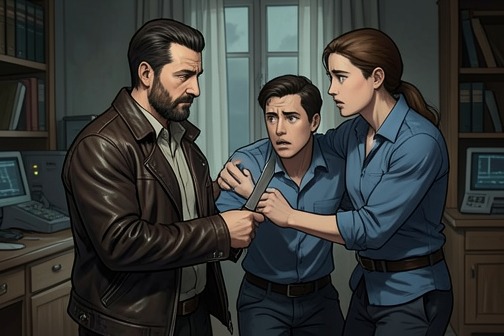
The stabbing of Daniel Skinner was committed by Ken, not The Ghost, and [Will](entity:character-recall-character-will-17d4ceb7f768) and Ken’s father concealed that truth by paying The Ghost’s father five thousand dollars. Revealed years later in The Ghost’s confession to Will, the childhood violence and its cover-up recast Will’s memories of his father’s fear and silence, while exposing Julie as the sole other person entrusted with the truth.
## The Stabbing and Its Cover-up
The Ghost takes the story back to fourth grade and states plainly that Ken stabbed Daniel Skinner. The act’s immediate aftermath is known here through the explanation of the cover-up: Will and Ken’s father protected Ken by buying off The Ghost’s father with five thousand dollars. The confession overturns any assumption that The Ghost was responsible for the stabbing and makes the father’s intervention central to what followed.
The father’s decision was shaped, in The Ghost’s account, by his love for Ken and by his assessment of The Ghost’s home life. The Ghost says his father beat him regularly and that many people thought he should be placed in foster care. Will and Ken’s father believed The Ghost might either be cleared on grounds of self-defense or receive therapy and regular meals. His payment therefore served both to shield Ken and, as he understood it, to direct The Ghost toward a safer outcome.
## The Confession Reframes Earlier Memories
The disclosure gives new meaning to Will’s recollection of meeting his father at the Little League field. Will had also remembered his father’s crippling fear and icy silence after they returned, followed by his father telling [John Asselta](entity:character-recall-character-john-asselta-17af0156334b), “You want someone, you take me.” Once Ken’s guilt and the payment are made explicit, those earlier actions fall into a connected pattern: Will’s father had protected Ken before and was again prepared to place himself between danger and his son.
Will is stunned by the confession, but the separate memories quickly fit together. The scene’s reversal is not only the revelation that Ken stabbed Daniel; it is the discovery that Will’s father’s apparent fear and silence were bound to an old secret and a determination to protect Ken. The confession turns fragments of Will’s past into evidence of the burden his father had carried.
## Julie as the Other Keeper of the Truth
The Ghost says that only one other person had been told what really happened. When he asks Will to guess, Will realizes that the person was Julie. Her place in the revelation establishes that she had known the truth about Ken’s childhood act and its concealment, a fact that links her to a secret otherwise held by The Ghost and Will’s father.
The truth reaches Will through The Ghost’s delayed disclosure, rather than through the original incident itself. That delay makes the childhood stabbing an event with consequences extending into Will’s later understanding of his family: the act, the payment, his father’s protective choices, and Julie’s knowledge are finally recognized as parts of the same hidden history.
Event 18
Will's reunion with Carly
[Will Klein](entity:character-recall-character-will-klein-eb8b6b999b8d)’s reunion with Carly at the airport is the emotional culmination of the Ghost’s long effort to save Julie Miller’s child and bring her back to her family. The meeting is shaped by years of concealment: Nora’s escape and exchange of identities with [Sheila Rogers](entity:character-recall-character-sheila-rogers-7a874ade9e9d), [Sunny Klein](entity:character-recall-character-sunny-klein-e79158578f89)’s deathbed need for proof that Ken Klein was alive, and the Ghost’s determination to protect the child Julie died protecting. At the gate, the history arrives in the form of a girl’s smile—and [Will](entity:character-recall-character-will-17d4ceb7f768) has to step forward into a family life that secrecy had kept out of reach.
## The histories behind the meeting
Nora’s account connects Carly’s arrival to the precarious life she and Sheila had built while hiding. Nora had fled [Cray Spring](entity:character-recall-character-cray-spring-8f242debc8a0) and continued to fear being found; after learning that Cray had hired a private detective who knew she was in the Stockholm area, she decided to move to [New York City](entity:location-recall-location-7a11f2949ca3). She wanted a more substantial identity in case he kept hunting her. Sheila faced the same problem: her assumed identity amounted only to a changed name. The women devised a plan and exchanged identities, making their personal histories—and the identities under which they lived—difficult to disentangle.
That exchange also makes the family’s later understanding of Carly more complicated. The Ghost points Will to Sheila’s autopsy report. It records none of the physical signs he says he would expect if Sheila had given birth, and he concludes that Sheila could not have been Carly’s mother. The revelation overturns the apparent connection between Sheila’s identity and Carly’s origins. The Ghost’s final instructions supply the family relationships Will must preserve: [Katy Miller](entity:character-recall-character-katy-miller-0af74c93589d) is Carly’s aunt, and the Millers are her grandparents. He identifies Julie, rather than Sheila, as the mother whose child he vowed to save.
Nora’s earlier decision to tell [Sunny](entity:character-recall-character-sunny-8770992776bb) that Ken was alive gives the reunion another thread of history. Nora had loved Sunny and could not bear to leave her in pain without the truth. Even in her illness, Sunny was skeptical and needed proof. Nora gave her Ken’s photograph, the hidden picture that Will later found and that helped set his search in motion. The photograph is thus more than evidence of Ken’s survival: it links Sunny’s final days to Will’s eventual return to the family truth Carly’s arrival makes immediate.
## The Ghost’s final intervention
Before Carly comes through the gate, the Ghost explains that he did not return for revenge or justice. He says that Julie died protecting him, that he failed her, and that he made a vow to save her child. It took him eleven years to fulfill it. The reunion therefore follows a long promise, not a sudden act of rescue: the Ghost’s account frames the moment as the delayed consequence of Julie’s death and of his own sense of responsibility.
He also tells Will that he sent surveillance footage to [Joseph Pistillo](entity:character-recall-character-joseph-pistillo-2805cc411582) so that [Philip McGuane](entity:character-recall-character-philip-mcguane-b17f487722ac) will not bother him. The Ghost says he found evidence in the house that night and kept it for all those years, and assures Will that he and Nora are safe. The protection of the family is joined to the exposure of the danger around it: the Ghost has dealt with the threat while preserving the evidence that can be used against [McGuane](entity:character-recall-character-mcguane-24bbc59e8e60). His intervention allows Will’s attention to turn from survival to the people waiting at the gate.
As passengers continue to disembark, the Ghost presses a piece of paper into Will’s pocket. Will ignores it in the moment. The gesture leaves an unresolved object at the edge of the reunion: even as the Ghost completes his vow and says he has taken care of everything, one final message remains unread. The immediate priority is not the paper, but the daughter Will has not yet seen.
## Carly arrives
The Ghost specifically warns Will not to let Carly’s family ties disappear with the secrets that have surrounded her. Katy is her aunt; the Millers are her grandparents. His request makes the reunion larger than a private meeting between father and daughter. Carly is arriving into a network of kinship that concealment has obscured, and Will is being charged with letting those relatives be part of her life.
Then Carly walks through the gate. Will registers her poise and sees Julie in her; when Carly spots Nora, her face opens into a smile. The smile breaks something open in Will, who describes his heart as shattered. He recognizes in it Sunny’s smile, an echo of his mother and of Julie, neither of whom has been wholly extinguished by death. In a single expression, Carly carries the likenesses of the women whose love and loss have shaped the story. The recognition is bodily and immediate before it can be made into an explanation: Will chokes back a sob, and someone places a hand on his back.
The Ghost gently tells Will to go, pushing him toward his daughter. Will looks back, but [John Asselta](entity:character-recall-character-john-asselta-17af0156334b) has already disappeared. The man who has spent eleven years trying to save Julie’s child does not remain to claim the reunion for himself. Will makes his way toward Carly and Nora, bringing the scene to its decisive change: the child who had been protected through hidden identities and long absences is now within reach of her father.
## The reunion’s meaning
The airport meeting gathers several kinds of inheritance without treating them as interchangeable. Carly is Julie’s child; Katy and the Millers are her relatives; Nora is the woman Carly loves; and Will is the father who has finally been brought to her. The Ghost’s instructions recognize that family is not only a question of biological origin. Carly’s bonds with Nora and her extended family matter in the life Will is being asked to make possible.
The scene also gives the Ghost’s vow an ending while leaving Will with its consequences. The Ghost has secured their safety and passed on the family obligations he believes matter, then vanishes before the reunion can become his. Will, instead, must take the last step himself. The epilogue returns to the paper he ignored, identifying it as the first lines of a newspaper clipping. The reunion thus closes the long separation between Will and Carly without erasing the history that brought them there: the hidden identities, the deaths, and the evidence remain part of what the family must carry forward.